
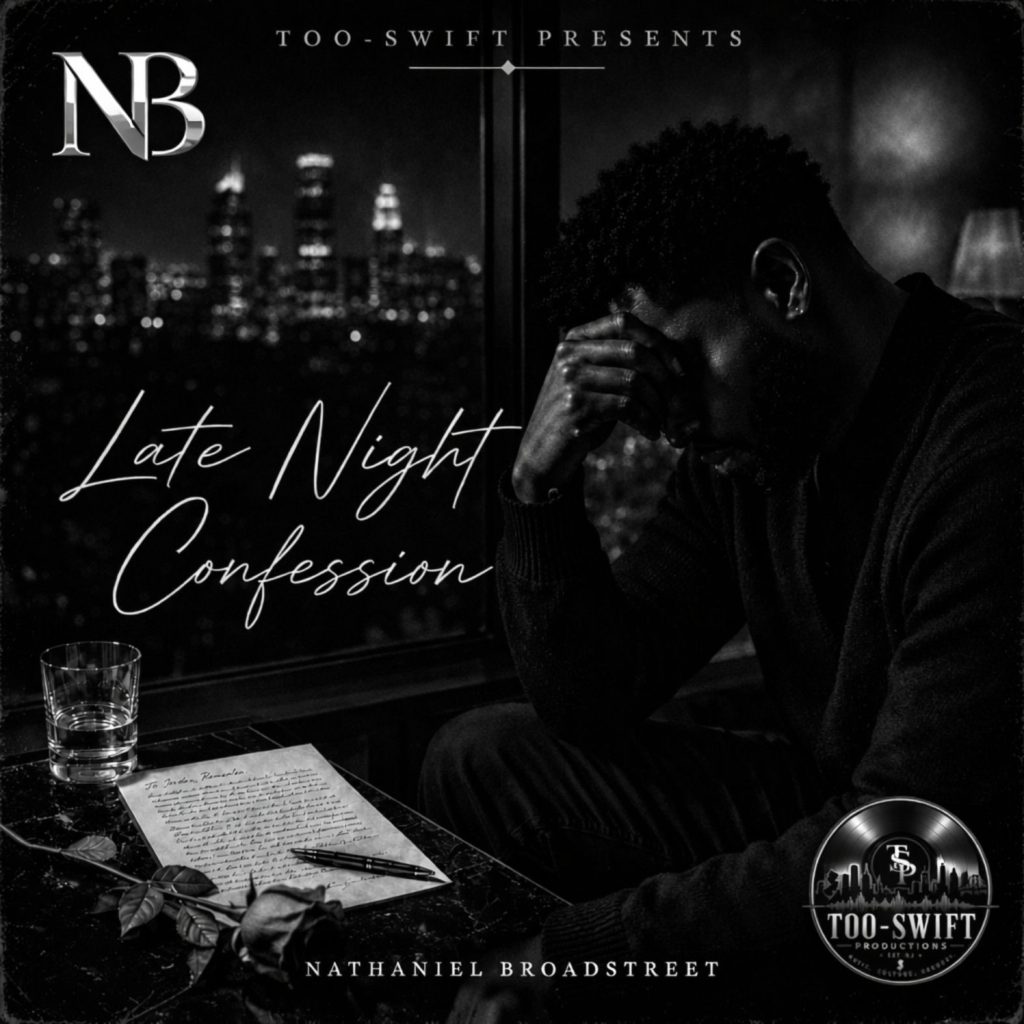
True vulnerability rarely keeps business hours. Nathaniel Broadstreet understands that instinct, shaping “Late Night Confession” like the kind of unfiltered 2 a.m. voice note you nearly delete before sending. The premise is familiar R&B territory, but the intimacy feels current: a confession built around the painful realization that, this time, you were the problem.
From Uptown Atlantic City, New Jersey, Broadstreet draws from a deep R&B lineage while keeping his footing in the present. Prince, Michael Jackson, New Edition, Luther Vandross, Earth, Wind & Fire, Rick James, and Troop all sit within his musical vocabulary. His aim is clear, to recover the vocal-first sincerity of classic R&B without turning nostalgia into a costume. On “Late Night Confession,” that influence registers as atmosphere rather than imitation.
The song opens with wordless vocals drifting across soft atmospheric pads, setting an intimate after-hours tone before the first verse arrives. Broadstreet enters with uncomfortable honesty: “I’ve been running from the truth, I owe you.” He does not ask to be excused. Instead, he spends the first half of the song naming what went wrong, admitting to “bossing” his partner around, using words designed to hurt, and breaking trust. Those details give the confession weight. Plenty of breakup songs hide inside abstraction; Broadstreet stays with the recognizable mistakes that damage an actual relationship.
The production keeps that guilt from becoming heavy-handed. Warm electric piano chords and clean guitar plucks rest over crisp snares, restrained hi-hats, and a subtle 808 sub-bass. The groove remains smooth and controlled, even as the lyrics grow more remorseful. That contrast gives the track forward motion and keeps the emotional stakes from sinking into self-punishment.
The chorus opens the record up. “This is my late night confession / I’m done with second guessing” is direct, and that plainness gives it staying power. Broadstreet is not interested in making regret sound more complicated than it is. He wants a way back in. Layered harmonies, flashes of falsetto, and emotional ad-libs widen the hook while leaving the central vocal line in focus.
The second verse brings one of the song’s sharper images. Broadstreet describes replaying the relationship “like a movie,” then realizing he treated his partner like an extra when they were the co-star. On paper, the metaphor risks feeling a little neat, yet his conversational delivery keeps it grounded. More importantly, the line shifts the song away from self-pity and toward a clearer recognition of the person he failed to value.
When the bridge arrives, “Just tell me there’s still a place / For the love that we almost lost”, the arrangement expands with it, carrying the song toward its emotional peak before easing into an instrumental and vocal outro. There is no forced resolution. The track fades with the confession still suspended, leaving the question of forgiveness unanswered.
Broadstreet brings the vocal-first tradition of classic R&B into a crisp, low-slung modern setting without losing the vulnerability at the center of the song. “Late Night Confession” fits naturally on a late-night playlist because it understands what those hours can do: turn memory into evidence, and regret into something suddenly impossible to ignore.
Stay connected with Nathaniel Broadstreet on Instagram, X, and TikTok.